
Although many patients have no problem wearing an upper denture, some people find it difficult to wear and eat with lower dentures. Several implant-supported replacement options are available if you are missing all of your lower teeth.
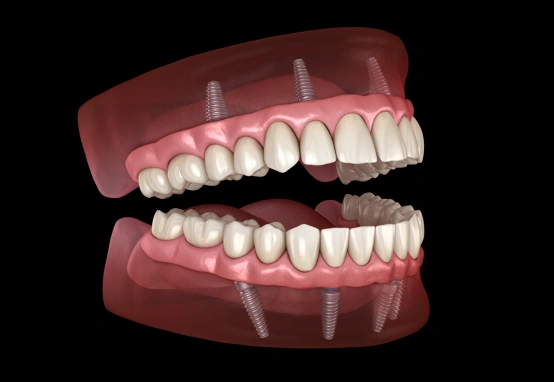
Ball Attachment Denture
One option is to have two implants placed in your lower jaw and a denture made that snaps onto these implants. This option allows your lower denture to be more stable while chewing than without implants. However, there will still be movement of your lower denture, and sore spots will occur if any food particles, especially seeds, are caught under it. As with all removable replacement teeth, you still will need periodic appointments for denture adjustment.
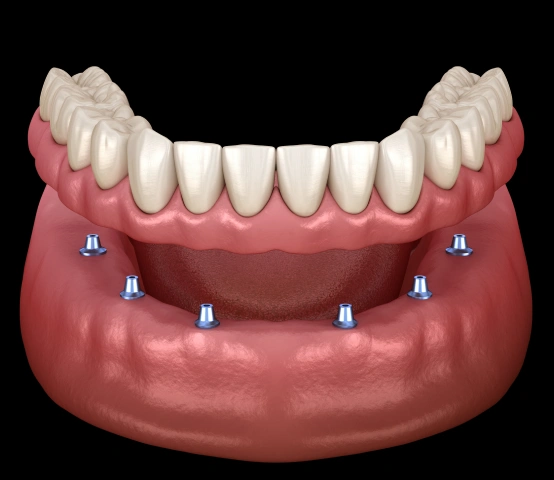
Conus Restoration
Atlantis® Conus concept is a conometric implant-supported dental prosthesis that uses a tapered cone design to retain a cap on the abutment by surface friction. The telescopic abutment design and the manufacturing standards provide a stable yet removable non-resilient prosthesis
Another option involves placing four to six implants, depending on your jaw size or shape, into your lower jaw. After healing is complete, the implants are connected with a custom-made support bar. Your denture will be made with special internal retention clips that attach onto the support bar, enabling the denture to snap firmly into place. This is called an “overdenture.” The advantage of this option is that it is much more stable than the first option and allows very little denture movement. Your denture is still removable for easy cleaning and maintenance.
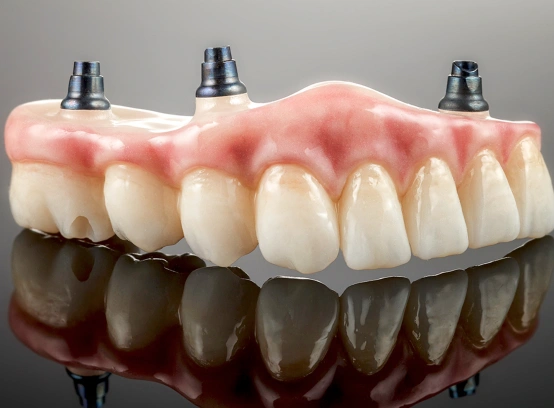
Screw Retained Denture (Hybrid)
A third option involves placing four or more implants in your jaw and attaching a permanent denture. Your denture is held in place by screws or clasps that secure it to the support posts or bar. It doesn’t touch the gum tissue, which allows you to clean under the denture without removing it. This denture will replace all your missing lower teeth and will not be removed except at maintenance visits. Although cleaning under your denture without removing it is more time consuming and requires more dexterity, many patients who want a permanent denture prefer this option.
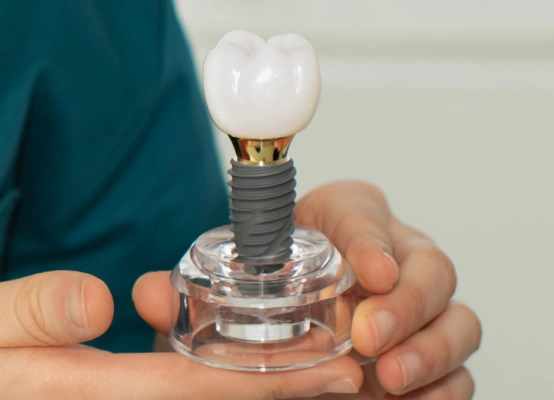
Individual Implants
The final option is to have all your teeth individually replaced so that they will appear to be growing out of your gum tissue and will most closely resemble the appearance of your natural teeth. This option usually requires eight or more implants. Separate abutments or support posts for each one of these implants will be made and crowns for each missing tooth will be placed. The teeth are often joined together for sinus grafting to replace bone height strength and support. Overall, this is the most costly option, because it requires the most implants and individual replacement tooth fabrication. Your replacement options may also be limited by the current size and shape of your jawbone.
What If I’m Missing All of My Upper Teeth?
A similar range of treatment options is also available for your upper jaw. However, because the bone is not as hard as that in the lower jaw, people often need more implants to support their new replacement teeth. Depending upon the number of implants to be placed, it may be possible to eliminate the need for covering the roof of your mouth with a complete denture. This option allows you to fully taste your food and gives you a better sense of its temperature. Your denture will feel more natural. You will still have a removable denture, which makes cleaning the support bar and denture much easier.
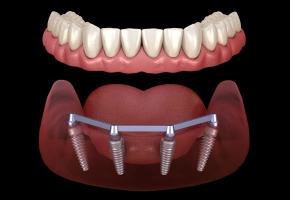
Implant Retained Upper Denture
Depending upon the number of implants to be placed, it may be possible to eliminate the need for covering the roof of your mouth with a complete denture. This option allows you to fully taste your food and gives you a better sense of its temperature. Your denture will feel more natural. You will still have a removable denture, which makes cleaning the support bar and denture much easier.
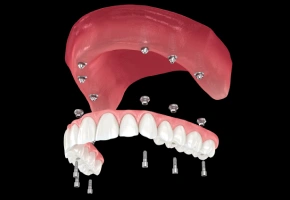
Individual Upper Implants
If you want a restoration that is similar to your natural teeth and therefore not removable, you probably will need eight to ten individual implants placed. This is followed after healing by the placement of the abutments and new replacement crowns.
Frequently Asked Questions About Full Mouth Dental Implants
Although many patients have no problem wearing an upper denture, some find lower dentures difficult to wear and eat with. Several implant-supported replacement options are available if you are missing all of your lower teeth, ranging from removable to fixed solutions. These include the ball attachment denture, conus restoration, screw-retained (hybrid) denture, and individual implants. Dr. Cavallari will help you select the option that best fits your needs, comfort preferences, and budget at Tidewater Laser Perio and Implants in Virginia Beach.
A ball attachment denture involves placing two implants in your lower jaw and creating a denture that snaps onto these implants. This option allows your lower denture to be more stable while chewing than a denture without implants. However, there will still be some movement of the lower denture, and sore spots can occur if food particles — especially seeds — become caught underneath. As with all removable replacement teeth, you will still need periodic appointments for denture adjustment.
A conus restoration, based on the Atlantis® Conus concept, is a conometric implant-supported prosthesis that uses a tapered cone design to retain a cap on the abutment through surface friction. This option involves placing four to six implants — depending on your jaw size or shape — which are connected with a custom-made support bar after healing. The denture is made with special internal retention clips that attach onto the bar, enabling it to snap firmly into place. This "overdenture" is much more stable than a ball attachment denture and allows very little movement, while still being removable for easy cleaning and maintenance.
A screw-retained denture, also called a hybrid denture, involves placing four or more implants in your jaw and attaching a permanent denture that is held in place by screws or clasps secured to the support posts or bar. Unlike removable options, this denture does not touch the gum tissue, which allows you to clean underneath it without removing it. It replaces all of your missing teeth and is only removed at maintenance visits. While cleaning under the denture requires more time and dexterity, many patients who want a permanent, fixed solution prefer this option.
The individual implant option involves replacing each of your teeth separately so they appear to grow out of your gum tissue and most closely resemble natural teeth. This approach usually requires eight or more implants, with separate abutments or support posts and individual crowns fabricated for each tooth. The teeth are often joined together for additional support, and sinus grafting may be needed to replace bone height, strength, and support. This is the most costly option because it requires the most implants and individual tooth fabrication, and the number of implants may be limited by the current size and shape of your jawbone.
A similar range of treatment options is available for the upper jaw. However, because the bone in the upper jaw is not as hard as in the lower jaw, more implants are often needed to support replacement teeth. Depending on the number of implants placed, two primary options exist for the upper arch: an implant-retained upper denture and individual upper implants. Dr. Cavallari will evaluate your bone and recommend the most appropriate approach.
Yes, in many cases. Depending on the number of implants placed, it may be possible to eliminate the need for a denture that covers the roof of your mouth (the palate). An implant-retained upper denture that leaves the palate uncovered allows you to fully taste your food and gives you a better sense of its temperature, so the denture feels more natural. You will still have a removable denture, which makes cleaning the support bar and denture much easier.
If you want a restoration that closely resembles your natural teeth and is therefore not removable, individual upper implants are an option. Because the upper jaw bone is softer, this approach typically requires eight or ten individual implants. After the implants are placed and healing is complete, the abutments and new replacement crowns are placed. This provides the most natural-looking and permanent result for the upper arch.
The best option depends on several factors including your jawbone size and density, your preference for a removable versus fixed solution, how much denture movement you can tolerate, your ability to clean the restoration, and your budget. Removable options like the ball attachment denture are more affordable but allow more movement, while fixed options like hybrid dentures and individual implants offer maximum stability and a more natural feel at a higher cost. Dr. Cavallari will review all options with you and help you make the most informed decision.
Possibly. Bone grafting or sinus grafting may be needed depending on the amount and quality of bone available, particularly in the upper jaw where bone is softer and where sinus grafting can restore the height and strength needed to support implants. The size and shape of your existing jawbone may also influence how many implants can be placed and which restoration options are available. Dr. Cavallari will assess your bone with detailed imaging during your consultation.
Coverage for full mouth implant treatment varies significantly by plan and by the specific option chosen. Some dental insurance plans, including Delta Dental, Blue Cross Blue Shield, and Humana, may provide partial coverage toward certain components of treatment. Because full mouth restoration involves multiple procedures, our team will review your benefits thoroughly and provide a clear, itemized cost breakdown before treatment begins so you can plan with confidence.
Call Tidewater Laser Perio and Implants at (757) 412-0235 or request an appointment online at drcavallari.com. Dr. Cavallari will evaluate your jawbone, discuss your goals and preferences, and walk you through each upper and lower full-arch option to design a treatment plan that restores your smile, function, and confidence.
Are You Ashamed of Showing Your Missing Teeth?
Schedule a consultation today and reclaim the confidence to smile!

