
Towne Bank Building, 984 First Colonial Rd Ste 300 Virginia Beach, VA 23454
Dental Implants for One Missing Tooth: What Are Your Options?

Losing a single tooth may not seem like a major dental problem, especially if the gap is toward the back of your mouth. But even one missing tooth can affect chewing, the way your teeth fit together, and the health of the surrounding jawbone.
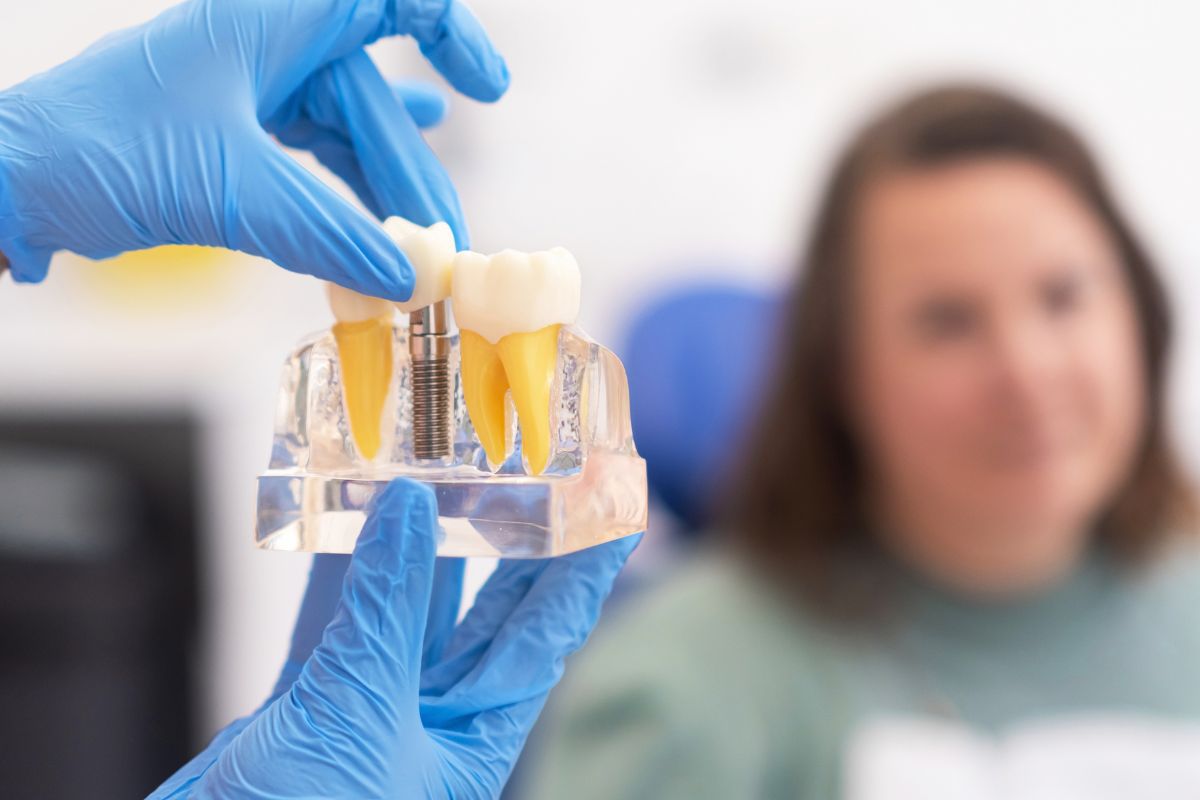
For many patients, dental implants offer a way to replace a missing tooth without relying on neighboring natural teeth for support. An implant serves as an artificial root, while a custom-made crown restores the visible portion of the tooth.
If you are exploring tooth replacement in Virginia Beach, understanding the differences between an implant, a dental bridge, and leaving the space untreated can help you make a more informed decision.
Why Replace a Single Missing Tooth?
The reasons for replacing a tooth go beyond appearance.
A missing tooth can affect how you chew and may change the distribution of forces across your bite. Depending on its location and the condition of your remaining teeth, the gap may also make cleaning more difficult or affect your confidence when smiling.
The jawbone in the area of a missing tooth can gradually lose volume because the natural tooth root is no longer present. An implant can stimulate the surrounding bone through functional loading, although it does not prevent every type of bone change.
Whether replacement is necessary, and which option is appropriate, depends on the tooth involved, your oral health, and your goals.
Three Ways to Replace a Missing Tooth
1. A Single Dental Implant and Crown
A single implant replaces the root of the missing tooth. Once the implant has integrated with the jawbone, a connector and custom crown can complete the restoration.
One advantage is that the implant generally does not require the neighboring teeth to be reshaped for support, as a conventional tooth-supported bridge typically does.
An implant can also help maintain bone in the area where it is placed. However, it requires surgery and adequate supporting tissue, and the crown may eventually need maintenance or replacement.
2. A Traditional Dental Bridge
A dental bridge replaces the missing tooth by attaching a replacement tooth to crowns supported by neighboring teeth.
A bridge may be appropriate when adjacent teeth already need crowns or when implant surgery is not the preferred option. However, preparing healthy neighboring teeth to support a bridge can involve removing some natural tooth structure.
Your dentist can explain the benefits, limitations, and maintenance needs of a bridge compared with an implant.
3. Leaving the Space Untreated
In some situations, a patient may consider not replacing a missing tooth immediately. That decision should follow a professional evaluation rather than an assumption that a gap will not matter.
The location of the tooth, bite relationships, the condition of the opposing tooth, and future treatment needs can all influence the consequences of leaving the space open.
Ask your dental professional what monitoring or replacement options make sense for your situation.
How Does a Single-Tooth Implant Work?
The process typically involves several stages, although the order and timing vary.
Step 1: Examination and Planning
Your provider examines the missing-tooth area, evaluates the gums and remaining teeth, and reviews your medical history. Dental imaging helps assess the bone and nearby anatomical structures.
The goal is to determine whether an implant can be placed in a suitable position and whether additional treatment is needed.
Step 2: Extraction or Site Preparation
If the damaged tooth is still present, it may need to be removed. In selected cases, an implant can be placed at the time of extraction. In other situations, the area needs to heal first.
A bone graft may be recommended to help preserve or rebuild the ridge, depending on the condition of the socket and surrounding bone.
Step 3: Implant Placement and Healing
The implant is placed into the jawbone during a surgical procedure. It then needs time to integrate with the surrounding bone.
This process, called osseointegration, is essential to providing a stable foundation for the replacement tooth. Healing time varies with the patient, the location, and the procedure.
Step 4: Placement of the Final Crown
Once healing and clinical assessment support restoration, a custom crown is connected to the implant. The provider evaluates its fit, appearance, and relationship with your bite.
The final goal is a replacement tooth that functions comfortably and can be cleaned as part of your daily routine.
What If You Have Bone Loss?
A missing tooth does not automatically mean you have insufficient bone for an implant. However, bone loss can occur after extraction, trauma, or periodontal disease.
If the available bone is limited, your treatment plan may include bone grafting, ridge augmentation, or another approach to improve the site. Some patients may be candidates for alternative restorations that do not require implant surgery.
Tidewater Laser Perio & Implants provides bone grafting and implant-related periodontal procedures in Virginia Beach. Your clinician can explain whether additional preparation is appropriate for your case.
Are Dental Implants Right for Everyone?
Dental implants can be an effective option for many adults, but candidacy depends on individual circumstances.
Your provider may consider:
- Gum health and any history of periodontal disease.
- The amount and quality of available jawbone.
- Medical conditions and medications.
- Tobacco use.
- Bite forces and teeth grinding.
- Your ability to maintain the implant and attend follow-up visits.
Patients with active gum disease may need periodontal treatment before implant placement. Smoking and certain health conditions may also influence healing and long-term risk.
An honest conversation about your health helps your dental team create an appropriate plan.
How Do You Care for a Single Dental Implant?
An implant does not develop a cavity, but the tissues around it can become inflamed. Plaque can collect along the gumline and contribute to peri-implant disease.
To help protect your implant:
- Brush twice daily with a soft-bristled toothbrush.
- Clean between teeth every day.
- Use any implant-specific cleaning tools recommended by your provider.
- Attend professional maintenance appointments.
- Report bleeding, swelling, tenderness, or changes in the bite.
The crown and implant components may also need professional evaluation over time. Good home care supports longevity but cannot guarantee that an implant will never need treatment.
Choosing Your Next Step in Virginia Beach
Replacing one missing tooth involves more than choosing a material or restoration. Your treatment plan should account for the surrounding teeth, bone, gum health, and long-term maintenance.
At Tidewater Laser Perio & Implants, patients can explore implant placement and supporting procedures, including bone grafting and periodontal treatment, in one specialized setting.
If you are considering dental implants, schedule an evaluation to learn whether a single-tooth implant, bridge, or another approach best fits your needs.
FAQs
Can one dental implant replace one missing tooth?
Yes. A single implant can support an individual crown when the patient’s bone, gum health, and other clinical factors are suitable.
Is an implant better than a dental bridge?
Neither option is best for everyone. An implant generally avoids preparing neighboring teeth for support, while a bridge may be appropriate in other circumstances. Your dentist can compare the options for your case.
Do I need bone grafting for a single implant?
Not always. Bone grafting may be recommended if the available bone is insufficient or if the extraction site needs additional support.
How long does a single dental implant take?
Treatment can take several months because the implant often needs time to integrate with the jawbone. The timeline varies depending on healing and whether additional procedures are needed.
How do I keep a single implant healthy?
Brush, clean between teeth, attend professional maintenance appointments, and contact your provider if you notice bleeding, swelling, discomfort, or changes in the restoration.



We’re Here to Help!
Call us with any questions or to request an appointment.
