
Towne Bank Building, 984 First Colonial Rd Ste 300 Virginia Beach, VA 23454
All on 4 Dental Implants: What to Know Before Replacing a Full Arch

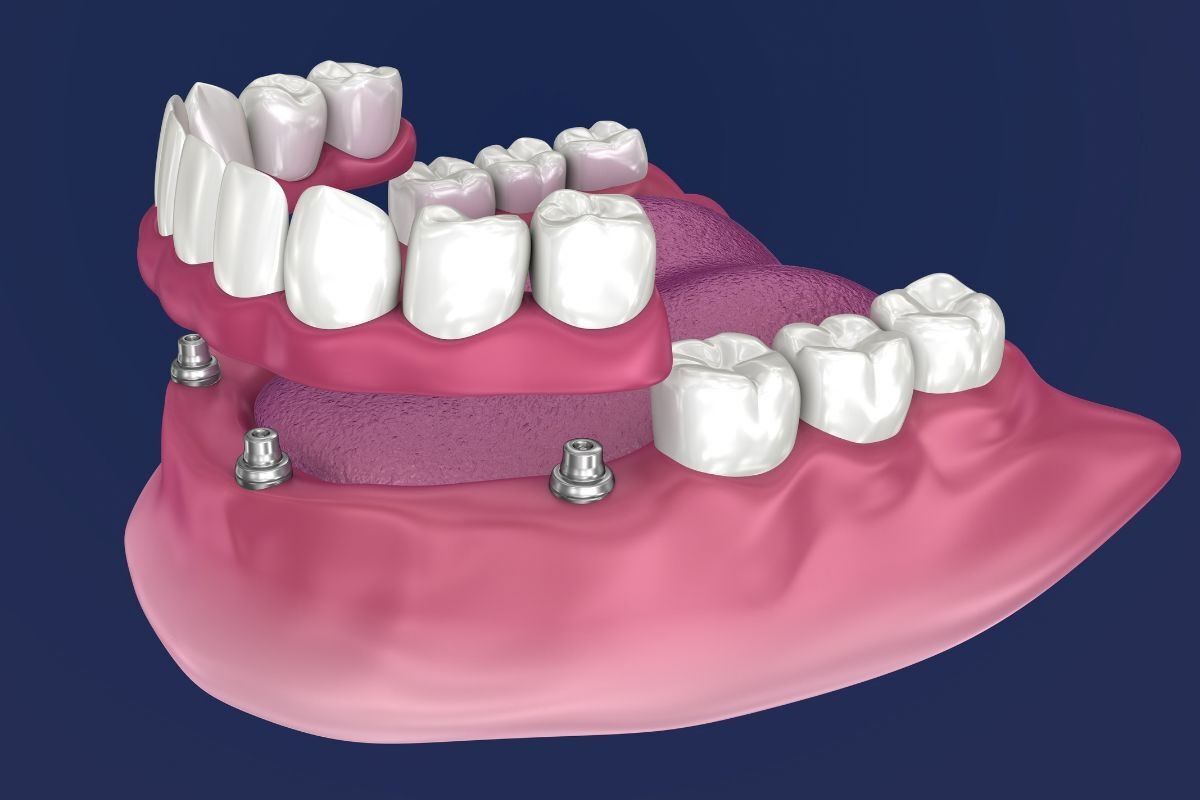
Living with multiple missing teeth can make everyday activities feel complicated. You may avoid certain foods, worry about dentures slipping, or feel uncomfortable showing your smile in photographs. For patients who have lost most or all of their teeth in an arch, implant-supported replacement teeth may offer another option.
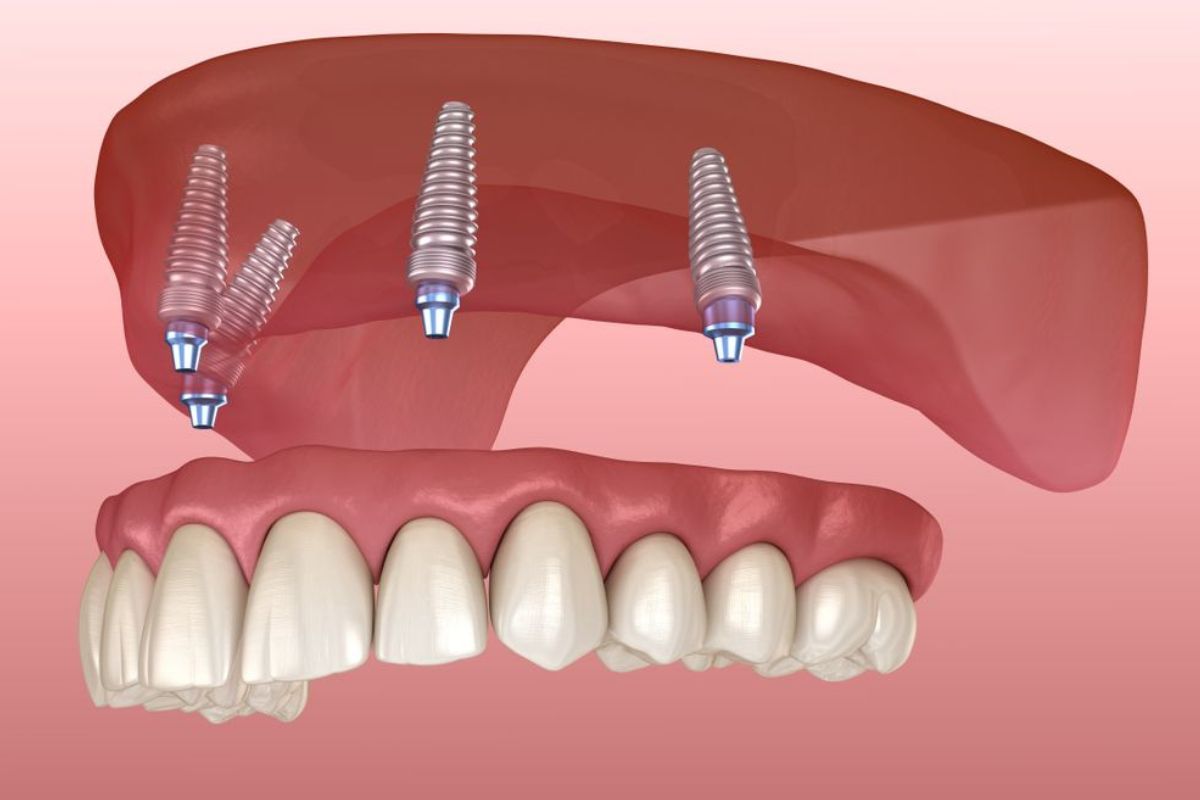
All on 4 dental implants are designed to support a full arch of replacement teeth using four strategically positioned dental implants in appropriate cases. The approach can reduce the number of implants needed compared with placing a separate implant for every missing tooth.
At Tidewater Laser Perio & Implants in Virginia Beach, patients can explore implant treatment options based on their oral health, jawbone structure, and individual goals. Understanding how the All-on-4® treatment concept works can help you prepare for a productive consultation.
What Are All on 4 Dental Implants?
All-on-4 is a full-arch tooth replacement approach in which four dental implants support a connected set of replacement teeth. Two implants are generally positioned toward the front of the jaw, while the back implants are angled to use available bone strategically.
Unlike traditional dentures that rest on the gums, a fixed implant-supported bridge is attached to the implants. The patient does not remove this type of restoration as part of normal daily cleaning.
The treatment may be considered for people who have lost most of their teeth, have teeth that cannot be predictably restored, or struggle with conventional dentures. Suitability depends on a thorough clinical evaluation.
How Is All-on-4 Different From Traditional Dentures?
Conventional dentures rest on the gums and may rely on suction, fit, or adhesive for stability. Some patients adapt comfortably, while others experience movement during chewing or speaking.
An implant-supported full-arch restoration is secured to implants anchored in the jawbone. This can provide greater stability, although it requires surgery, healing, and a commitment to ongoing professional care.
The two options also differ in maintenance. Removable dentures can be taken out for cleaning, while fixed restorations require careful cleaning around and beneath the bridge.
Who May Benefit From All-on-4 Treatment?
All-on-4 may be worth discussing if you:
- Are missing most or all teeth in the upper or lower jaw.
- Have extensive tooth damage and are considering full-arch replacement.
- Find that conventional dentures move or feel uncomfortable.
- Want to understand fixed implant-supported teeth as an alternative to removable dentures.
- Have been told that traditional implant placement may be complicated by limited bone.
These are reasons to seek an evaluation, not a guarantee of candidacy. Bone volume, gum health, medical history, bite forces, and the condition of remaining teeth all influence treatment planning.
Does Bone Loss Rule Out All-on-4?
Not necessarily. Angled implant placement can make use of available bone and may reduce the need for certain bone-grafting procedures. However, it does not eliminate the need to evaluate bone quality, anatomy, and implant stability.
Some patients still require grafting or another approach. A clinician may use dental imaging, including three-dimensional imaging when indicated, to assess the jaw and nearby anatomical structures before recommending treatment.
What Happens During the Treatment Process?
Knowing the general sequence can make the process less intimidating. The exact plan and timeline vary from patient to patient.
Step 1: Examination and Treatment Planning
Your provider reviews your medical and dental history, evaluates the gums and remaining teeth, and assesses the jawbone. You should also discuss the appearance, function, and maintenance expectations of your future teeth.
If teeth need to be removed or gum disease needs treatment, those issues may influence the order of procedures.
Step 2: Implant Placement
The implants are surgically placed in planned positions. The number and placement of implants depend on the selected treatment approach and your anatomy.
Step 3: Temporary Replacement Teeth
Some appropriate patients can receive a temporary fixed restoration on the day of surgery. This is sometimes called immediate loading. It is not suitable for every patient, because the implants must have adequate initial stability and other clinical conditions must be met.
Temporary teeth are not necessarily the same as the final restoration. Your provider will explain any eating restrictions and how to protect the implants during healing.
Step 4: Healing and Final Restoration
The implants need time to integrate with the surrounding bone, a process known as osseointegration. Once healing and clinical assessments support the next step, the final bridge can be completed and fitted.
What Should You Expect During Recovery?
Recovery depends on the extent of surgery, your health, and your body’s healing response. Swelling, tenderness, and temporary dietary changes may occur after implant placement.
Your care team will give you instructions specific to your procedure. These may include:
- Eating soft foods during the initial healing period.
- Avoiding hard or crunchy foods until cleared.
- Keeping the surgical areas clean as directed.
- Taking prescribed or recommended medications according to instructions.
- Attending follow-up appointments.
Do not assume that temporary teeth mean you can immediately eat anything you want. Excessive biting forces can interfere with healing, so follow the specific guidance provided by your clinician.
How Much Maintenance Do All-on-4 Teeth Need?
Fixed implant-supported teeth are not maintenance-free. Plaque can collect around implants and beneath the bridge, and inflammation can affect the supporting tissues.
Your home-care routine may require a soft toothbrush, specialized floss, interdental brushes, or another cleaning aid recommended for your restoration. Your dental team should demonstrate how to clean the areas that are difficult to reach.
Professional implant maintenance is also important. Report bleeding, swelling, persistent tenderness, drainage, changes in your bite, or a loose restoration rather than waiting for symptoms to become painful.
Is All-on-4 the Right Choice for Your Smile?
All-on-4 is one way to replace a full arch, but it is not automatically the best solution for every patient. An implant-supported overdenture, another fixed restoration, or a different treatment plan may better fit your anatomy, preferences, or budget.
At Tidewater Laser Perio & Implants, patients in Virginia Beach and the surrounding Hampton Roads area can discuss dental implants, full-mouth replacement, and related periodontal procedures with a team experienced in implant care.
If you are considering all on 4 dental implants, schedule a consultation to learn whether this approach fits your oral health needs and what your treatment plan may involve.
FAQs
How many teeth can All-on-4 replace?
All-on-4 is designed to support a full arch of replacement teeth using four implants in appropriate cases. The number and design of the teeth depend on the treatment plan.
Can I get temporary teeth on the day of surgery?
Some patients qualify for a temporary fixed restoration on the day implants are placed. Eligibility depends on implant stability, bone conditions, and other clinical factors.
Does All-on-4 always avoid bone grafting?
No. The technique may reduce the need for certain grafting procedures, but some patients still require bone augmentation or an alternative treatment approach.
Is an All-on-4 restoration removable?
A fixed All-on-4 bridge is not removed by the patient during everyday use. A dental professional may remove it when needed for maintenance or repair.
How do I care for All-on-4 dental implants?
Clean around and beneath the restoration daily using the tools recommended by your dental team, and attend regular professional implant-maintenance appointments.

We’re Here to Help!
Call us with any questions or to request an appointment.
